About Me
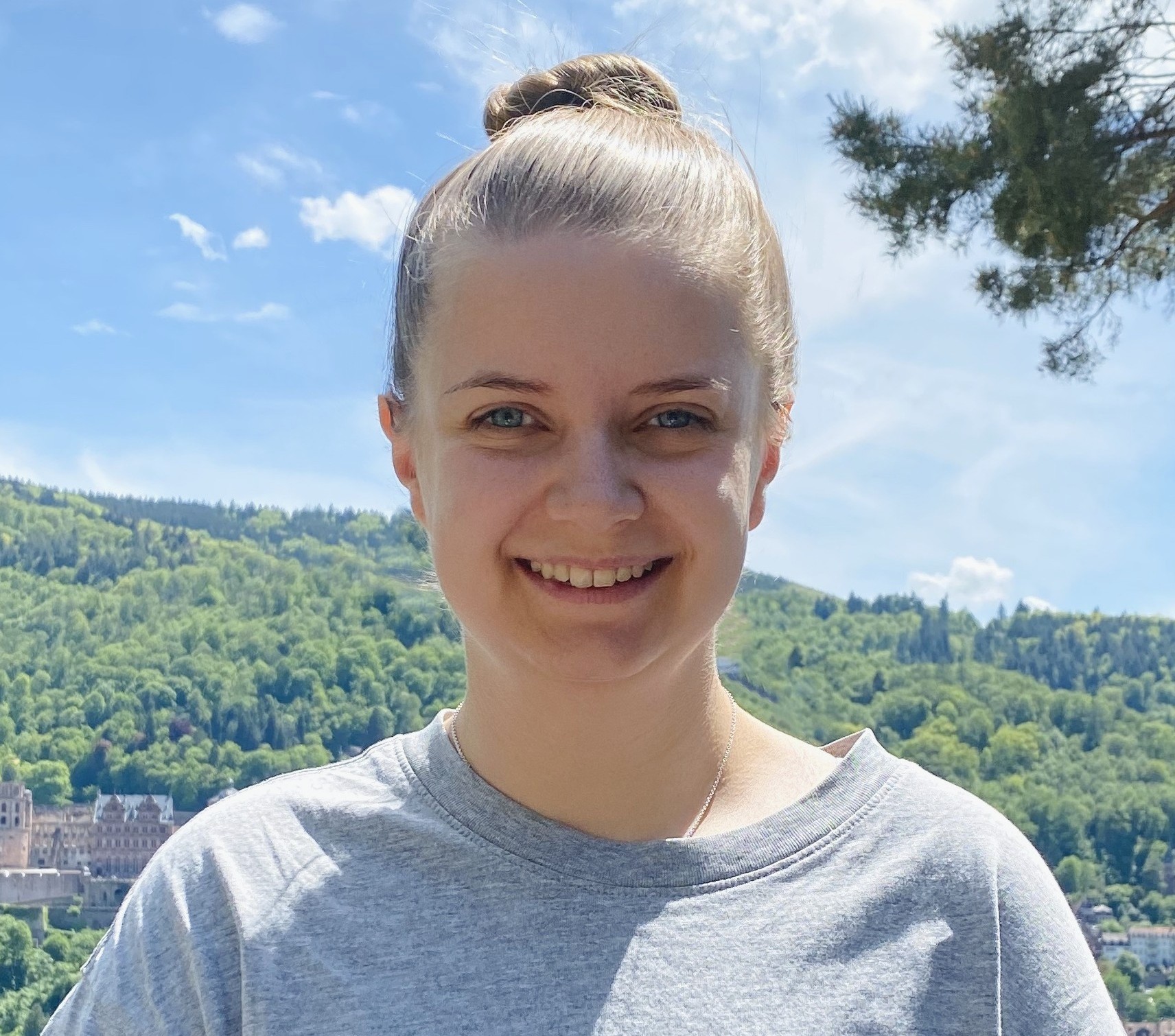
I am a PhD student at the Astronomisches Recheninstitut at Heidelberg University, where I study the interstellar medium and H II regions using integral field spectroscopy data from the SDSS-V Local Volume Mapper. My research focuses on understanding the physical conditions within nearby star-forming regions and what they reveal about galaxy formation and evolution, particularly in late-type galaxies.
I have completed my bachelor’s, master’s, and am doing now my doctoral studies at Heidelberg University, developing strong expertise in data analysis with Python, spectroscopy, and emission-line diagnostics. Beyond my research, I also manage the official Bluesky account for the LVM project.
I am driven by curiosity and a fascination for how galaxies evolve over time, as well as by the belief that good science grows in healthy, supportive environments. When I am not working, you will likely find me in the garden, spending time with my cat, or enjoying quiet moments with my family and friends.
Find here an SDSS-V interview: https://www.sdss.org/people/natascha-sattler/
Research
Find here all my refereed Articles on ADS and my ORCID
Measuring the Milky Way metallicity gradient using integrated SDSS-V LVM H II regions
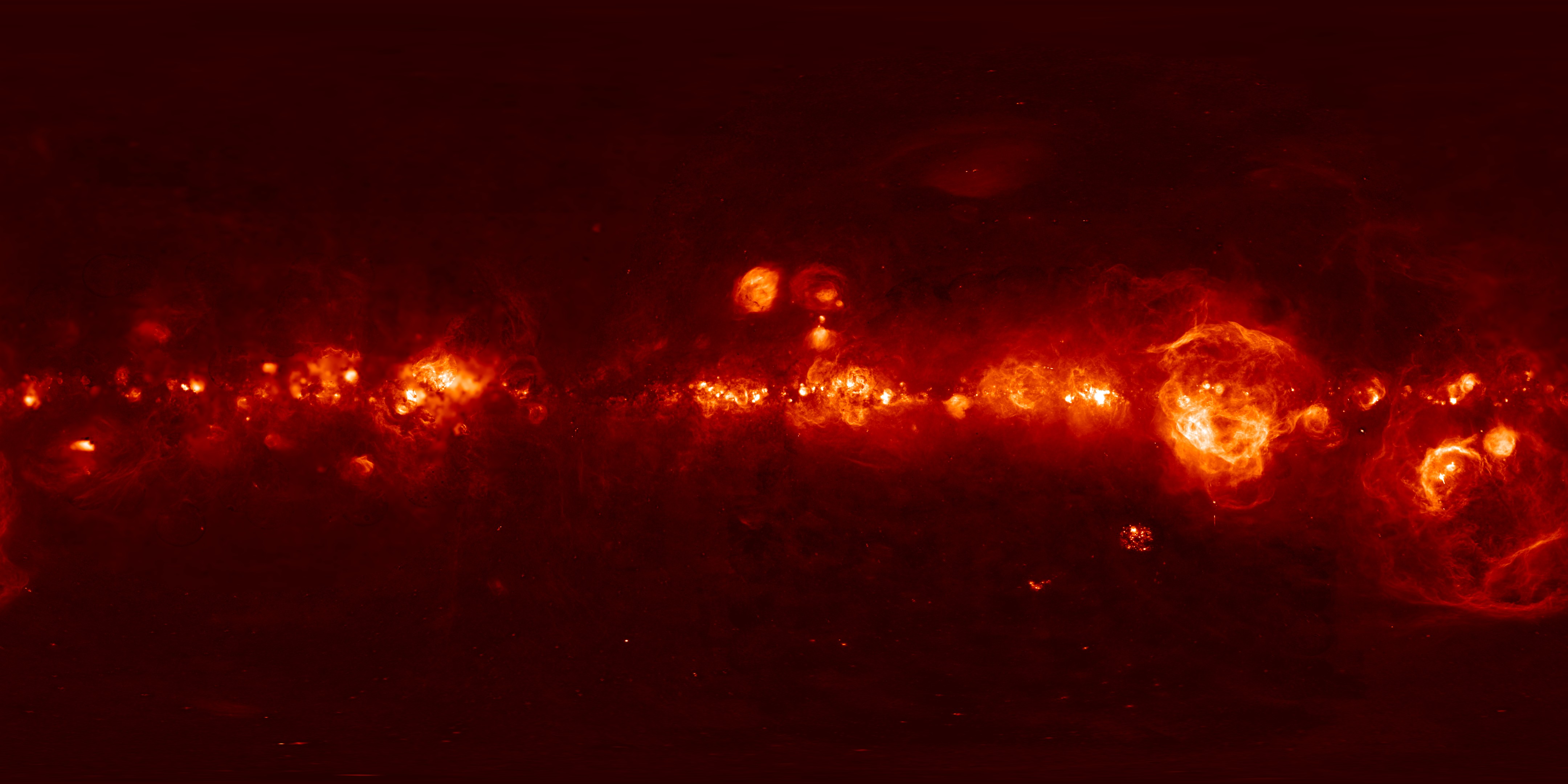
The chemical enrichment of the Milky Way is imprinted in the distribution of metals throughout its disk. The metallicity gradient is a key observable for testing models of Galactic formation and evolution. However, different diagnostics can lead to systematic discrepancies between abundance scales used in Galactic and extragalactic studies.
Building on the benchmark analysis of M 20, we expand our work to a larger sample of Milky Way H II regions with well-constrained Gaia distances. We want to integrate the SDSS-V Local Volume Mapper (LVM) coverage of each matching H II region and measure the abundances through the direct-method. We also want to compare these direct measurements with strong-line diagnostics to bridge Galactic and extragalactic approaches in the metallicity measurement.
Supervisor: Kathryn Kreckel @ Astronomisches Rechen-Institut.
Spatially mapping the physical conditions in the Trifid Nebula with SDSS-V LVM
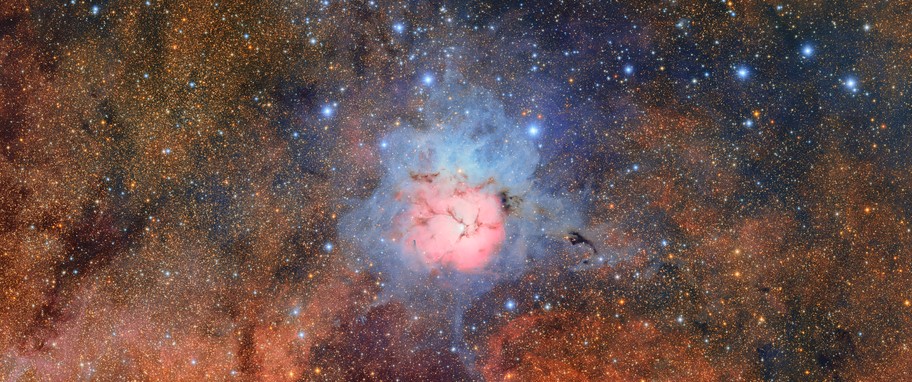
In regions of strong star formation, the gas in the interstellar medium (ISM) is ionized. Because the gas consists mostly of hydrogen (H), this ionization of molecular hydrogen atoms builds an H II region. However, H II regions also contain heavier elements and provide all the initial abundances for star formation. Knowing these abundances is important to probe chemical galaxy evolution models. Since metals act as coolants in the gas, we can obtain the abundances by measuring the electron temperature through emission lines. The electron temperature is, however, not homogeneous across the H II region and temperature variations can lead to an underestimation of the abundances. These variations may come from density inhomogeneities, winds, shocks, or the distribution of multiple ionizing sources.
In this project, we use the SDSS-V Local Volume Mapper (LVM) to obtain spatially resolved spectroscopy of the Trifid Nebula (M20) at a resolution of ~ 0.24 pc. Because M20 is ionized by a single O-type star, it serves as an ideal laboratory to investigate internal structures in a nearly symmetric H II region. From the emission line diagnostics, we derive maps of electron temperatures, densities, and oxygen abundances and compare them with integrated measurements to assess how variations influence direct-method determinations of chemical abundances in star-forming regions.
Supervisor: Kathryn Kreckel @ Astronomisches Rechen-Institut.
Tracing the Evolution of edge-on star-forming disk galaxies by analyzing stellar population properties of their thin and thick disks.
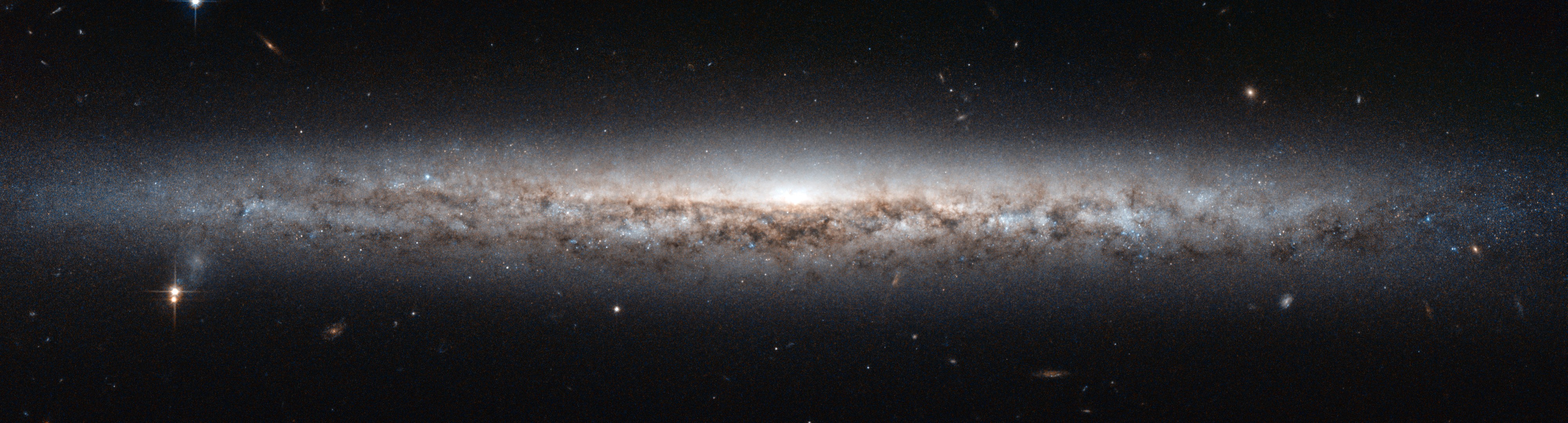
In disk galaxies, the thin and thick stellar disks preserve the history of their formation and evolution. The thick disk, in particular, carries important clues about the early dynamical and chemical processes that shaped galaxies. However, its origin and its relation to the ongoing star formation in the thin disk remain open questions.
In this project, we investigate the formation and evolution of thick disks in star-forming late-type galaxies using integral-field spectroscopy. We use observations from the Multi-Unit Spectroscopic Explorer (MUSE) and apply full-spectrum fitting techniques to derive spatially resolved maps of stellar ages, metallicities, and [Mg/Fe] abundances. From these data, we extract the star formation histories of the stellar disks and compare the thin and thick disk components to explore how they formed, evolved, and contribute to the overall assembly history of disk galaxies.
Supervisor: Francesca Pinna & Nadine Neumayer @ Max-Planck-Institut für Astronomie.
Curriculum Vitae
Education & Employment
2026: Vice PhD Student Representative @ ZAH
2026: SOC of “Early Career Astronomers and their supporters” Session @ EAS 2026
2016 – 2019:
Service Staff (part-time) @ Ruderhaus GmbH, Worms, Germany
Teaching
Tutor & Night Assistant @ Landessternwarte Heidelberg
for the “Astrolab” student practical course (70 cm telescope)
Summer Term 2024 & Winter Term 2024/25
Talks & Posters
Talk on "Resolving physical conditions in star-forming regions with SDSS-V LVM"
@ "SDSS-V Collaboration Meeting"
2 – 6 Jun 2025, Heidelberg, Germany
https://sdss.github.io/meeting-2025/
Poster and Flash Talk on "Resolving physical conditions in the Trifid Nebula with SDSS-V LVM"
@ "Inter+Stellar: Harnessing the Intersection Between Stars and the Interstellar Medium"
12 – 16 May 2025, Baltimore, USA
https://www.stsci.edu/contents/events/stsci/2025/may/inter-stellar-harnessing-the-intersection-between-stars-and-the-interstellar-medium
Talk on "Relatively young thick discs in star-forming late-type galaxies"
@ "ARI Institute Colloquium"
23 Jan 2025, Heidelberg, Germany
https://zah.uni-heidelberg.de/talks-seminars-events
Poster and Flash Talk on "Resolving physical conditions in the Trifid Nebula with SDSS-V LVM"
@ "Heidelberg–Harvard Star Formation Workshop"
3 – 6 Dec 2024, Heidelberg, Germany
https://www2.mpia-hd.mpg.de/homes/hhsf/24/index.php
Talk on "Resolving physical conditions in the Trifid Nebula with SDSS-V LVM"
@ "SDSS-V Collaboration Meeting"
3 – 7 Jun 2024, Las Cruces, USA
https://sdss.github.io/meeting2024/
Talk on "The vertical structure of the spiral galaxy NGC 3501 - First stages of the formation of a thin metal-rich disk"
@ "Linking the Galactic and Extragalactic: Stellar Dynamics and Stellar Populations of the Milky Way and its Siblings"
28 Nov – 2 Dec 2022, Wollongong, Australia
https://extragalactic-milkyways.org/
Publications
First Author
“SDSS-V LVM: Resolving Physical Conditions in the Trifid Nebula”
Sattler, Natascha et al. (2026)
Astronomy & Astrophysics, Volume 706, A81, 17 pp.
“Relatively young thick disks in star-forming late-type galaxies”
Sattler, Natascha et al. (2025)
Astronomy & Astrophysics, Volume 698, A235, 25 pp.
“The vertical structure of the spiral galaxy NGC 3501: first stages of the formation of a thin metal-rich disc”
Sattler, Natascha et al. (2023)
Monthly Notices of the Royal Astronomical Society, Volume 520, Issue 2, pp.3066-3079
Find here all my refereed Articles on ADS.
Contact
Postal Address
Natascha Sattler
ZAH Astronomisches Rechen-Institut
Moenchhofstr. 12-14, 69120 Heidelberg, Germany
E-Mail
n.sattler@stud.uni-heidelberg.de
or
nataschasattler@outlook.de
Elements
Text
This is bold and this is strong. This is italic and this is emphasized.
This is superscript text and this is subscript text.
This is underlined and this is code: for (;;) { ... }. Finally, this is a link.
Heading Level 2
Heading Level 3
Heading Level 4
Heading Level 5
Heading Level 6
Blockquote
Fringilla nisl. Donec accumsan interdum nisi, quis tincidunt felis sagittis eget tempus euismod. Vestibulum ante ipsum primis in faucibus vestibulum. Blandit adipiscing eu felis iaculis volutpat ac adipiscing accumsan faucibus. Vestibulum ante ipsum primis in faucibus lorem ipsum dolor sit amet nullam adipiscing eu felis.
Preformatted
i = 0;

while (!deck.isInOrder()) {
    print 'Iteration ' + i;
    deck.shuffle();
    i++;
}

print 'It took ' + i + ' iterations to sort the deck.';
Lists
Unordered
- Dolor pulvinar etiam.
- Sagittis adipiscing.
- Felis enim feugiat.
Alternate
- Dolor pulvinar etiam.
- Sagittis adipiscing.
- Felis enim feugiat.
Ordered
- Dolor pulvinar etiam.
- Etiam vel felis viverra.
- Felis enim feugiat.
- Dolor pulvinar etiam.
- Etiam vel felis lorem.
- Felis enim et feugiat.
Icons
Actions
Table
Default
| Name |
Description |
Price |
| Item One |
Ante turpis integer aliquet porttitor. |
29.99 |
| Item Two |
Vis ac commodo adipiscing arcu aliquet. |
19.99 |
| Item Three |
Morbi faucibus arcu accumsan lorem. |
29.99 |
| Item Four |
Vitae integer tempus condimentum. |
19.99 |
| Item Five |
Ante turpis integer aliquet porttitor. |
29.99 |
|
100.00 |
Alternate
| Name |
Description |
Price |
| Item One |
Ante turpis integer aliquet porttitor. |
29.99 |
| Item Two |
Vis ac commodo adipiscing arcu aliquet. |
19.99 |
| Item Three |
Morbi faucibus arcu accumsan lorem. |
29.99 |
| Item Four |
Vitae integer tempus condimentum. |
19.99 |
| Item Five |
Ante turpis integer aliquet porttitor. |
29.99 |
|
100.00 |